Restricted Use Pesticide Usage: North Central Oʻahu
Waialua-Wahiawā
Executive Summary (2020 - 2021)
Our analysis of restricted use pesticide (RUP) usage data in the North-Central Oʻahu region includes the communities of: Waialua, Helemano, Whitmore Village and Wahiawā.
Children and families in the region of North-Central Oʻahu live, recreate and attend school near some of the most intensive pesticide use in the state. This region is home to the highest total pounds of active ingredient applied. Analysis of reported pesticide use for 2020 and 2021 shows extremely large applications of highly hazardous chemicals, including fumigants, neurotoxic insecticides, and persistent herbicides. Many of these substances are known to drift, contaminate water, and cause serious short- and long-term health impacts, particularly for children.
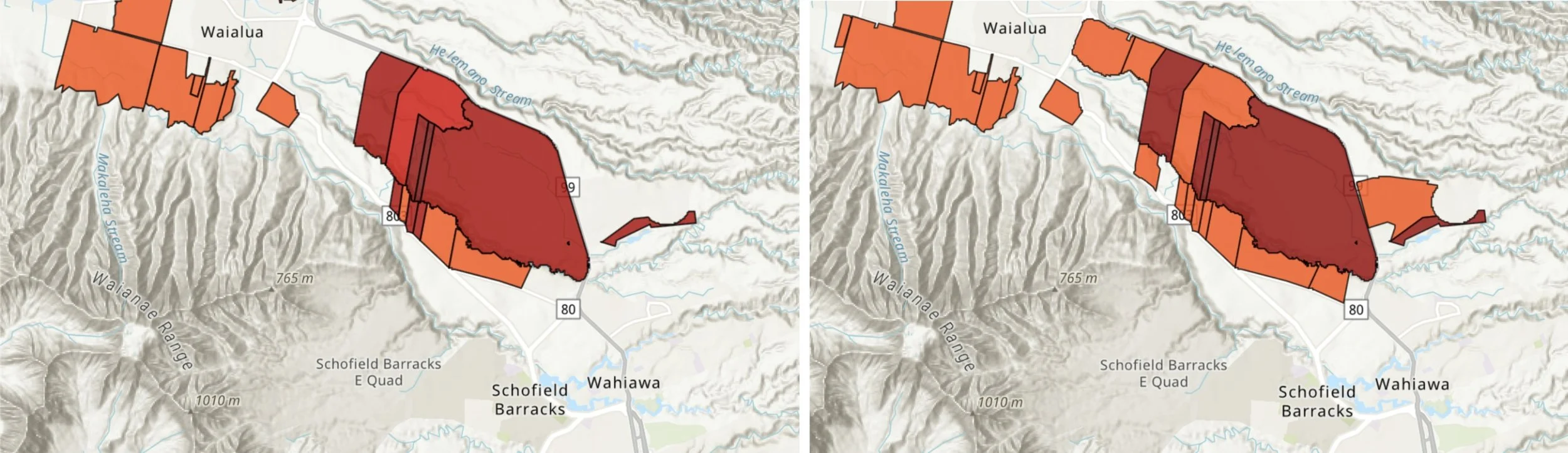
2020 & 2021
Key Findings
1. Massive Carcinogenic Fumigant Use in the Region:
1,3-Dichloropropene (Telone) dominated pesticide use in both years.
~141,590 lbs in 2020
~254,766 lbs in 2021 (a major increase)
This soil fumigant is volatile, a probable carcinogen, and associated with respiratory , neurological harm and increased cancer risk. Exposure to even tiny amounts of 1,3-D over time can cause severe health effects.
Off-site movement through air and soil gas makes use near schools especially concerning. It can drift for miles after application, endangering entire neighborhoods, schools, and homes near agricultural areas.
2. Widespread Use of Acutely Neurotoxic Insecticides
Organophosphates and carbamates were used in large quantities, including:
Diazinon (~11,596 lbs in 2021)
Oxamyl (~3,559 lbs in 2021)
Methomyl (~906 lbs in 2020; ~788 lbs in 2021)
Chlorpyrifos (2020)
These chemicals cause cholinesterase inhibition, which can impair brain and neurological development and cause acute poisoning.
Children are particularly vulnerable to these effects.
3. Persistent Herbicides Threaten Water Quality
Bromacil and hexazinone, both known groundwater contaminants, were applied in substantial amounts.
These chemicals persist in soil and water, increasing risk of long-term drinking water contamination.
4. High Aquatic and Pollinator Toxicity
Multiple synthetic pyrethroids were used each year, including permethrin, bifenthrin, cyfluthrins, lambda-cyhalothrin, and esfenvalerate.
These insecticides are extremely toxic to fish, aquatic invertebrates, and pollinators, even at low concentrations.
5. Communities Face Chemical Mixtures, Not Single Exposures
Fumigants, neurotoxic insecticides, herbicides, and pyrethroids are used within the same landscapes.
Combined exposures can amplify:
neurodevelopmental harm
immune and endocrine disruption
chronic disease risk
Current regulatory systems do not adequately evaluate cumulative or mixture-based exposure, especially near schools.
6. The Region is Surrounded by Extensive RUP Usage
The communities of Waialua, Wahiawā and Whitmore Village are flanked by RUP usage from multiple directions. Adjacencies range from .8 miles to 1.38 miles.
Wahiawā and Whitmore Village are also exposed to the south by heavy usage in Mililani. Analysis of Mililani usage is included in South-Central Oʻahu key findings.
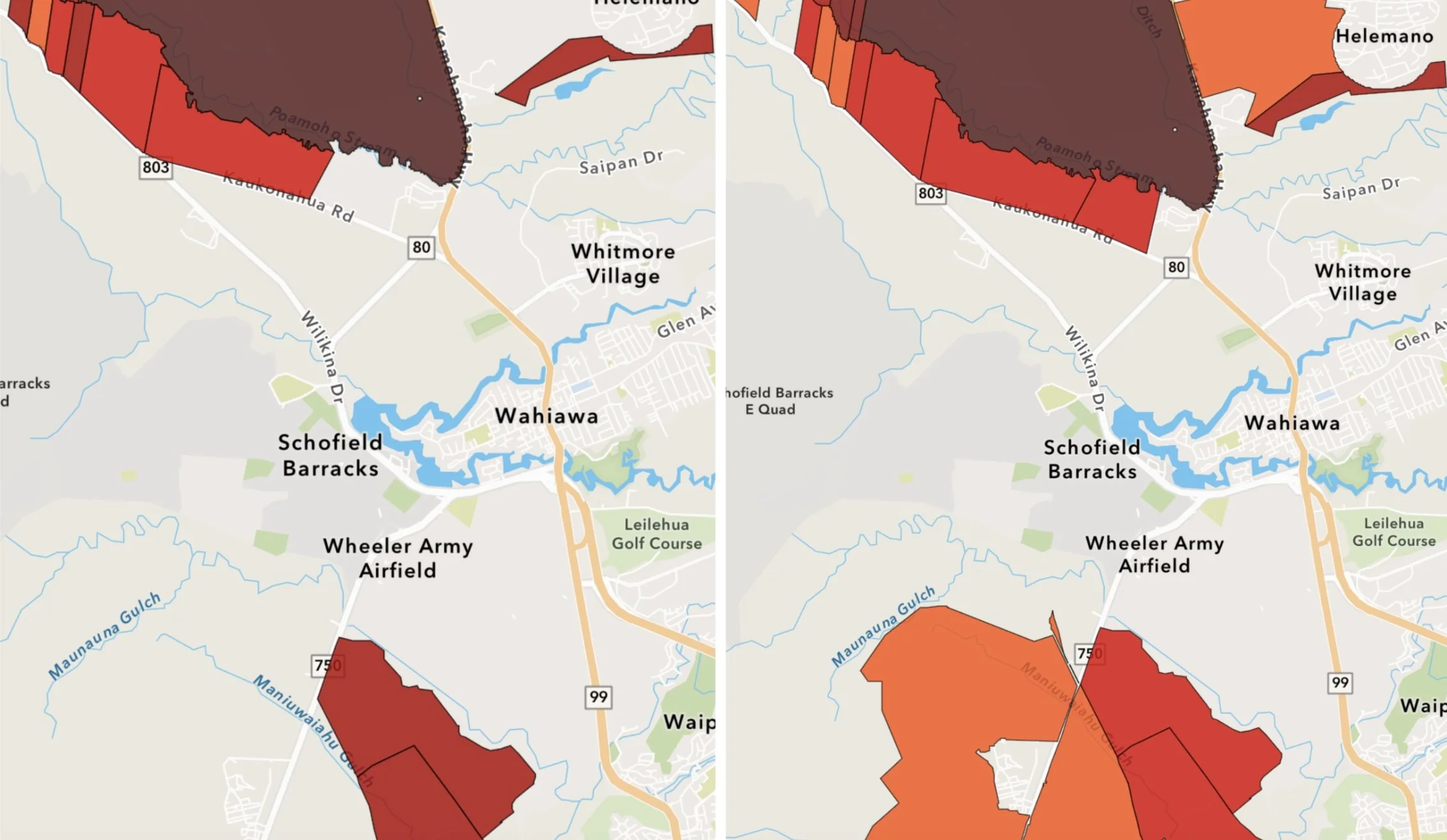
2020 & 2021
Schools At Risk
Pesticide residues travel miles from application sites into schoolyards, homes, water catchments, and air. Chronic exposure threatens children’s developing bodies, contributing to:
Brain development impacts
Respiratory harm and asthma risk
Childhood cancer susceptibility
Hormonal/endocrine interference
While some of the schools in the Wahiawā and Whitmore Village area may be just over a mile away from usage, the multiple points of exposure along with the extremely high amounts of drift prone RUP’s applied nearby raises concerns about health risks.
There are five schools in this region located within one mile of RUP applications (2020-2021):
St. Michael School, Waialua
Waialua Elementary, Waialua
Waialua High and Intermediate, Waialua
Haleiwa Elementary, Haleiwa
Solomon Elementary, Wahiawā
Year-to-Year Trends
Overall hazard increased in 2021, driven by a dramatic rise in fumigant use and very large applications of acutely toxic insecticides.
While individual chemicals fluctuate year to year, the overall reliance on highly hazardous pesticides remains constant.
The 2020–2021 data demonstrate a systemic pattern of high-risk pesticide use near schools and residential communities in North-Central Oʻahu. The scale and toxicity of these chemicals raise serious concerns for child health, community well-being, water resources, and environmental integrity.
If you want the full North Central Oʻahu Report, email safefarmssafefood@gmail.com 